RE:Activate Future
Adaptive Reusing Housing Blocks
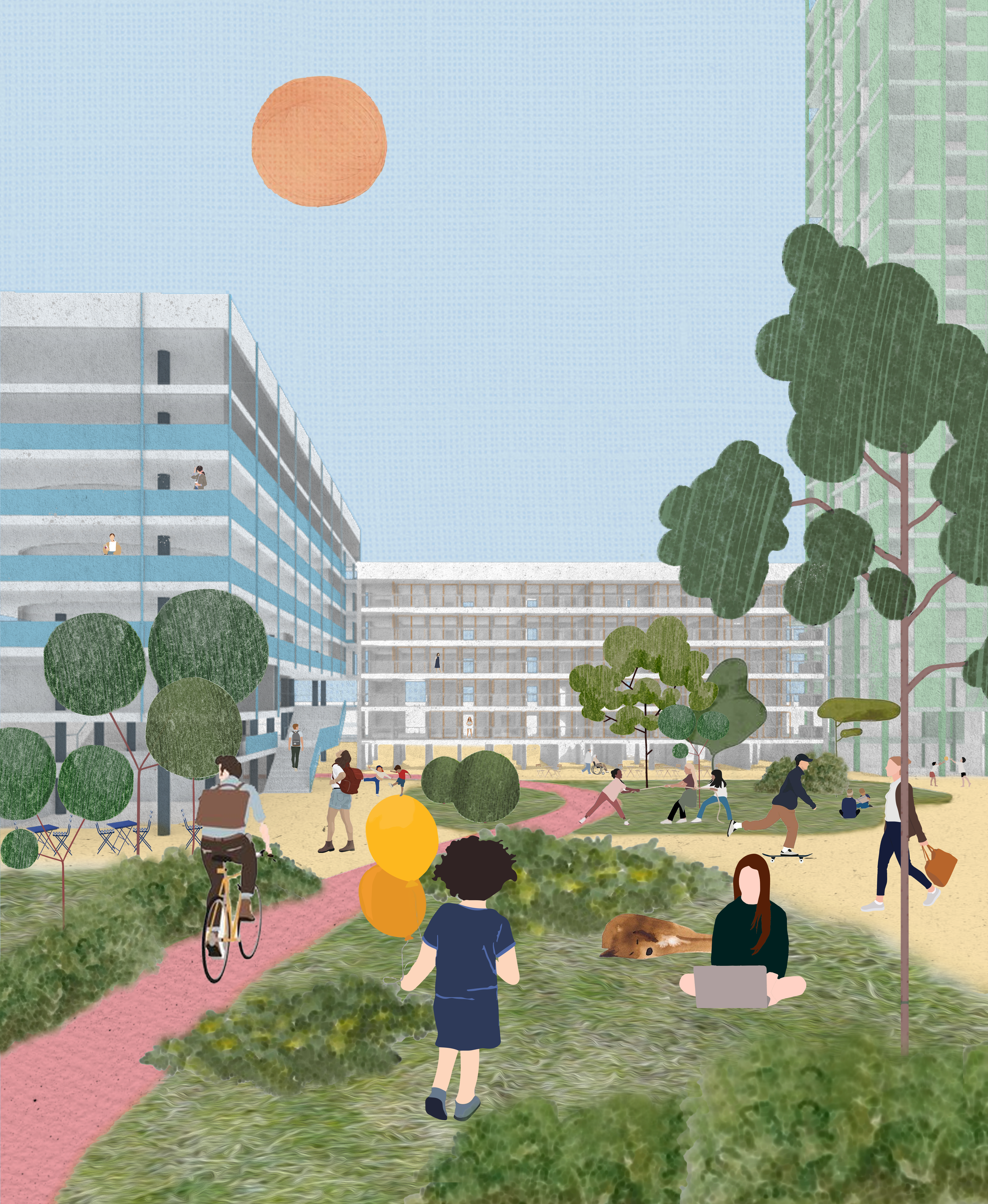
As the existing residents personalised shared corridors and door fronts, creating vibrant and individualised little front yards while respecting each other's boundaries.
Reimagining Future Living Model
Responding to the transformation of the working model, especially after the pandemic, the design supports work-from-home trends by integrating live-work spaces and collective living areas, fostering a self-sufficient community.
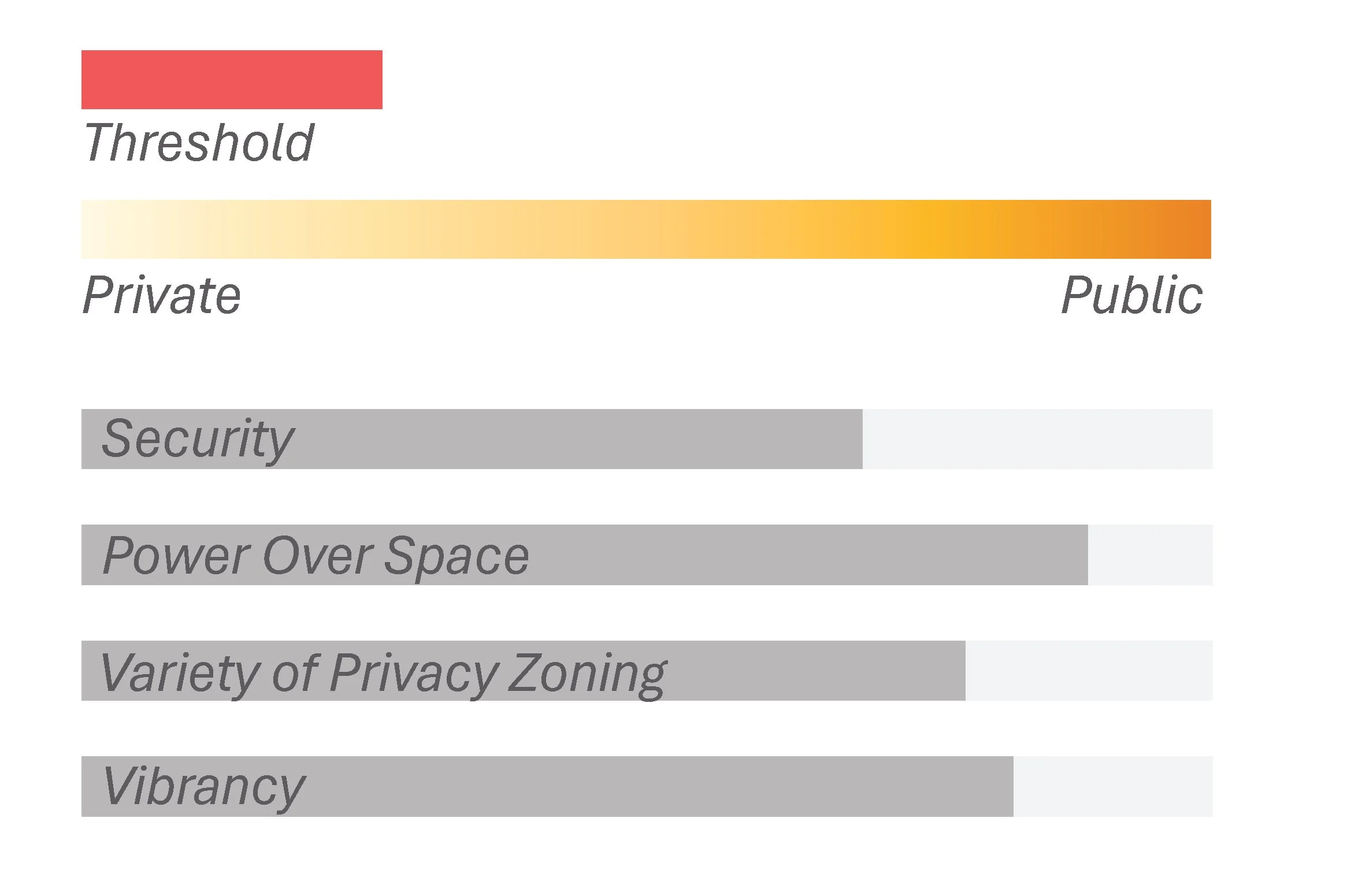
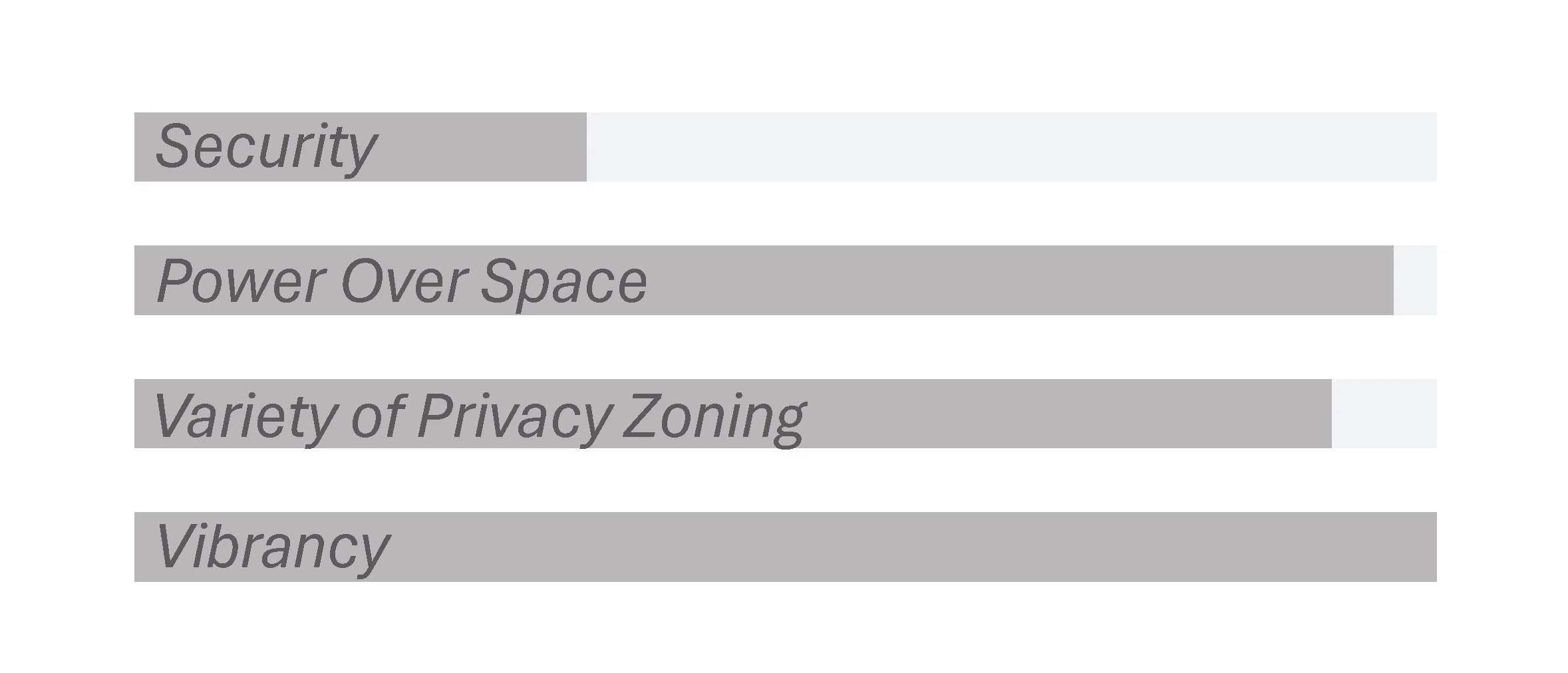
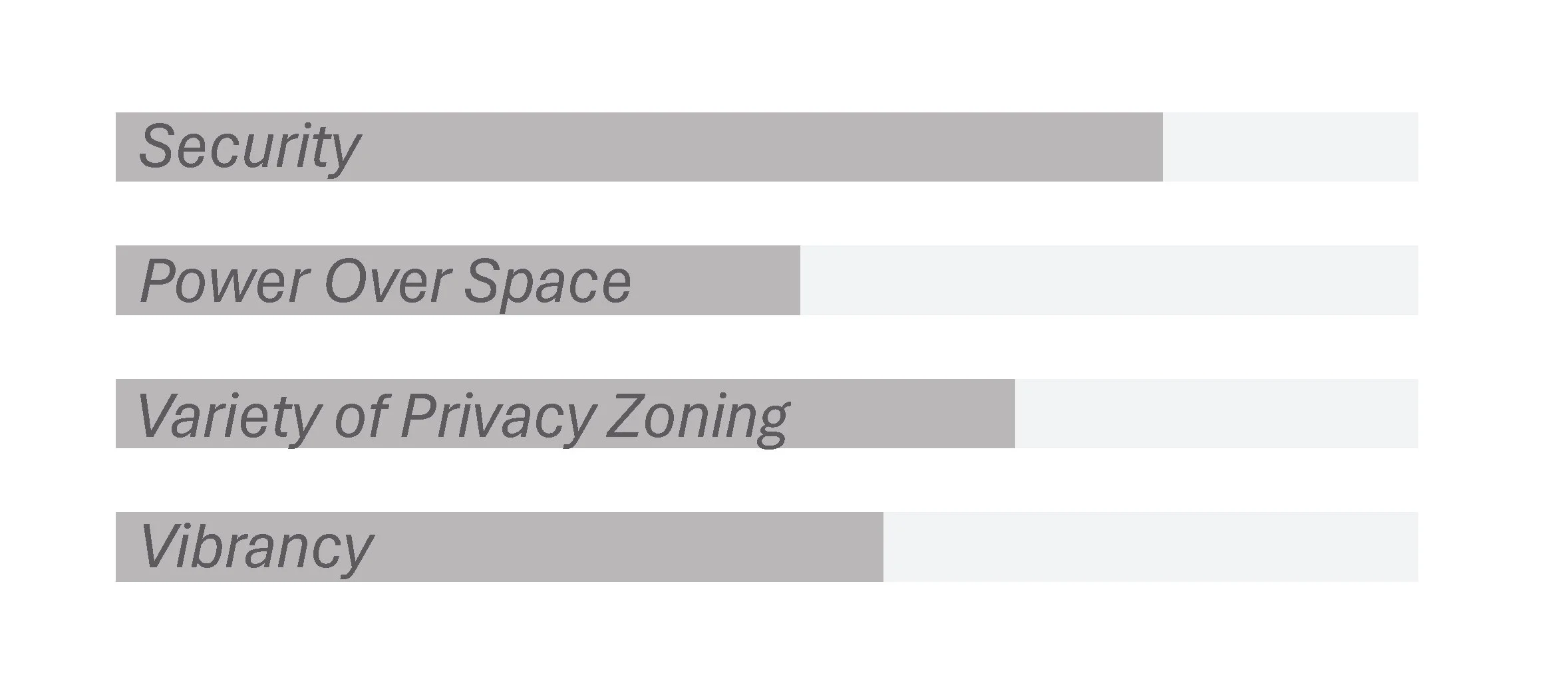
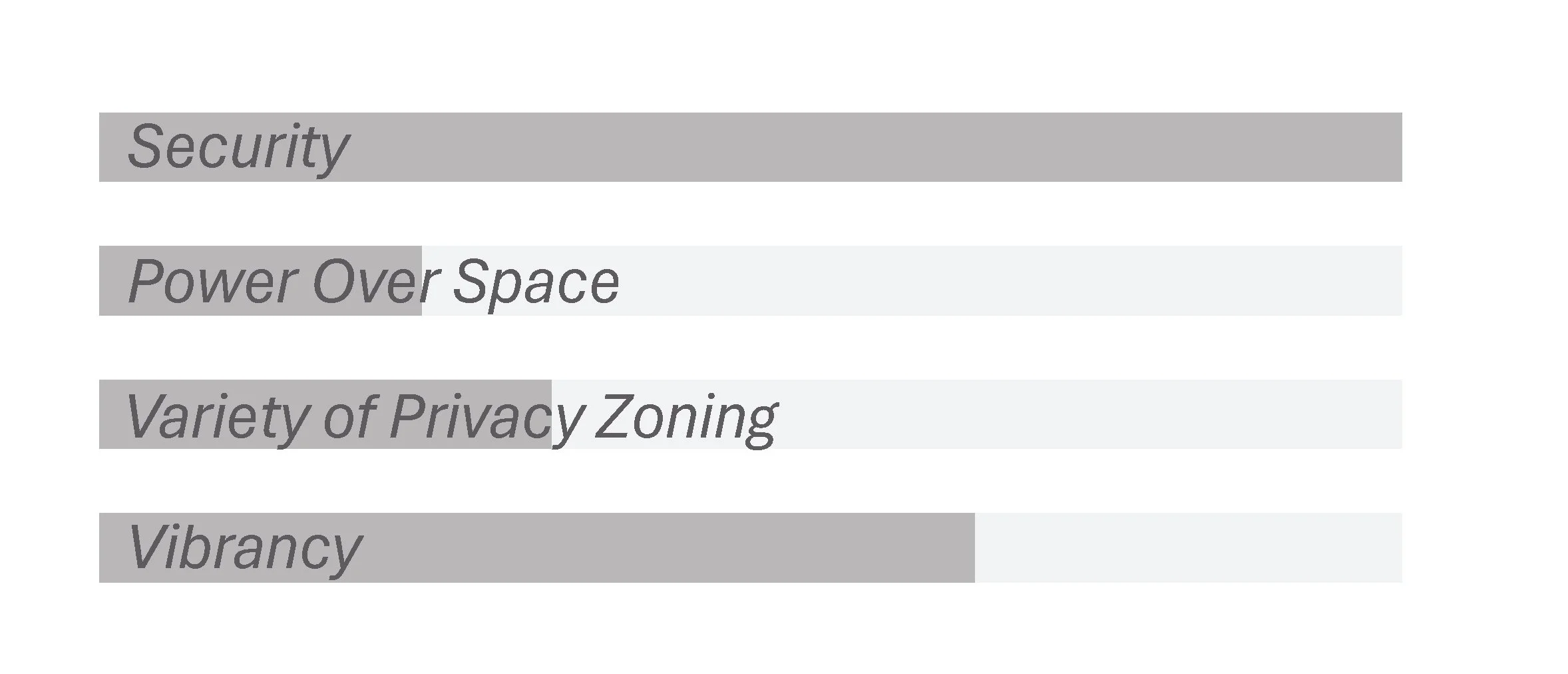
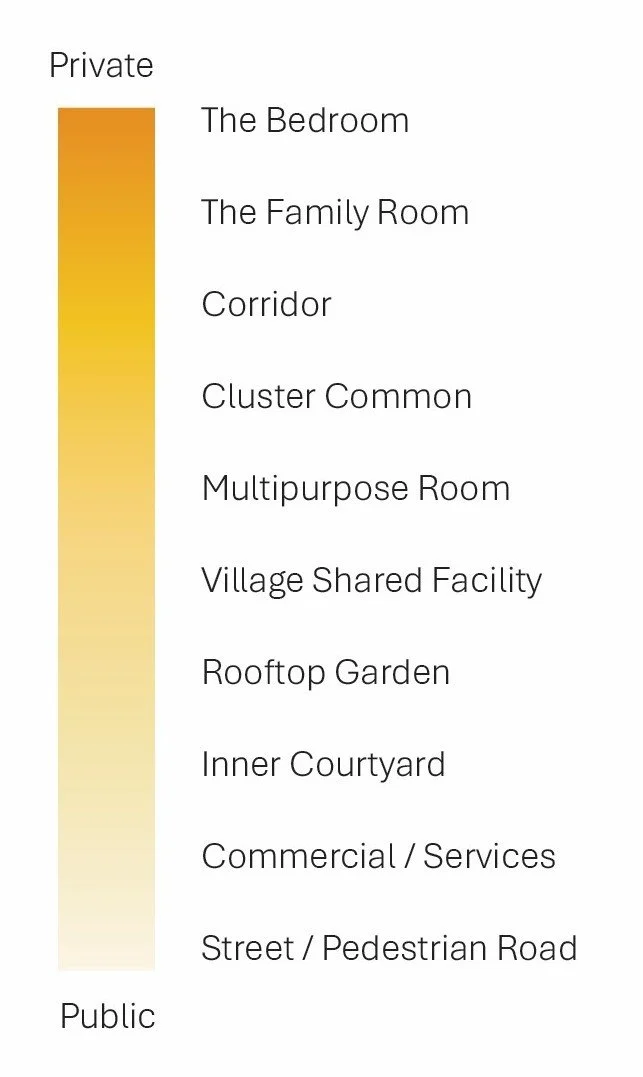
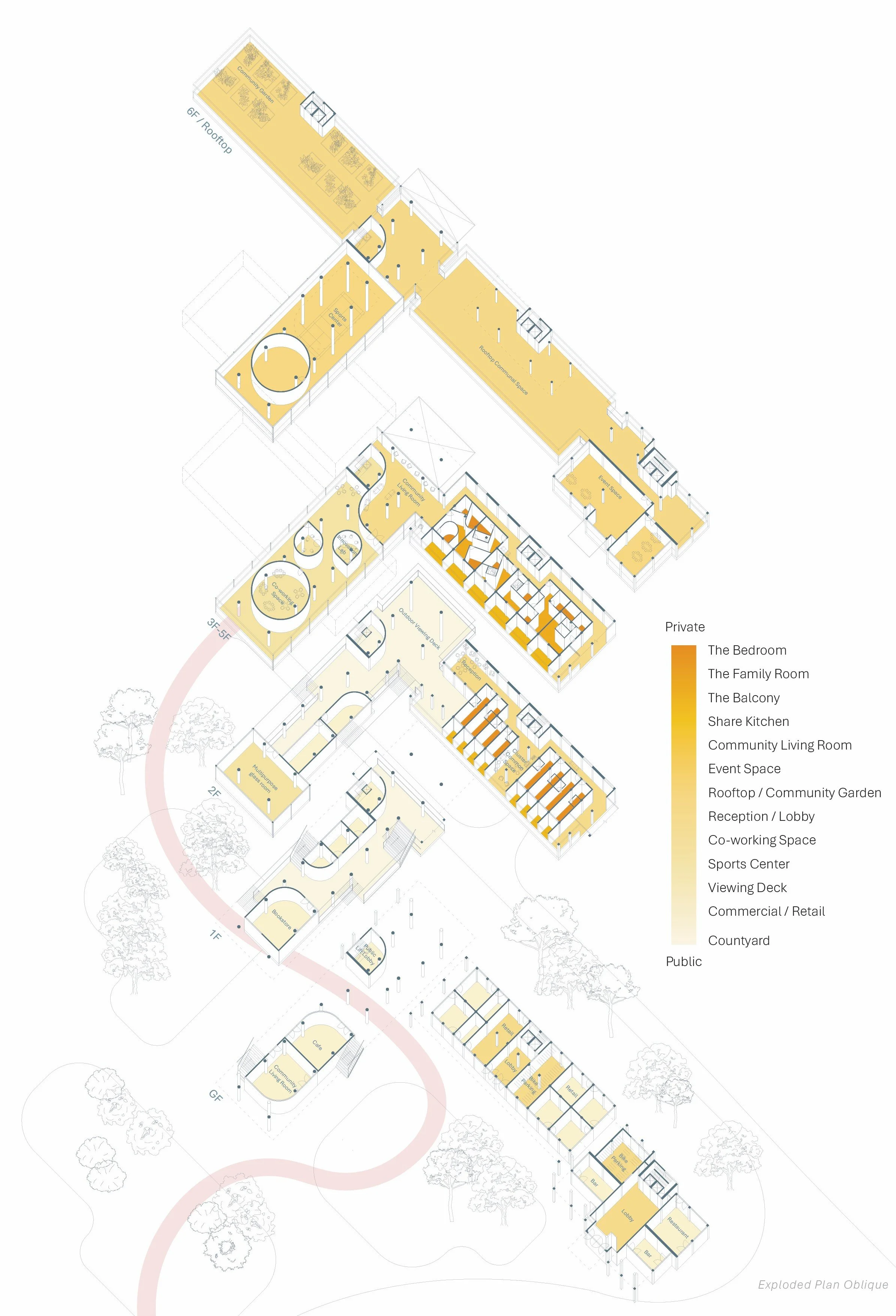
Creating Layers of Privacy Zoning
Layers of privacy zoning are enhanced to balance the isolation from remote work with opportunities for social interaction, empowering residents to shape their identity within communities.
This urban housing project is a mixed-use development integrating housing, commercial spaces, and public facilities, designed to serve a diverse user group, including existing workers who live on-site, low- and middle-income groups and workers from nearby high-tech parks.
Year:
Site Location:
Project Type:
Plot Area:
Gross Floor Area:
Floor Area Ratio:
2024 Autumn, Year 4
Jiangong Community, Tongle Area,
Nanshan District, Shenzhen, China
Urban Housing, Mixed-use Development
51200 sqm
153600 sqm
3
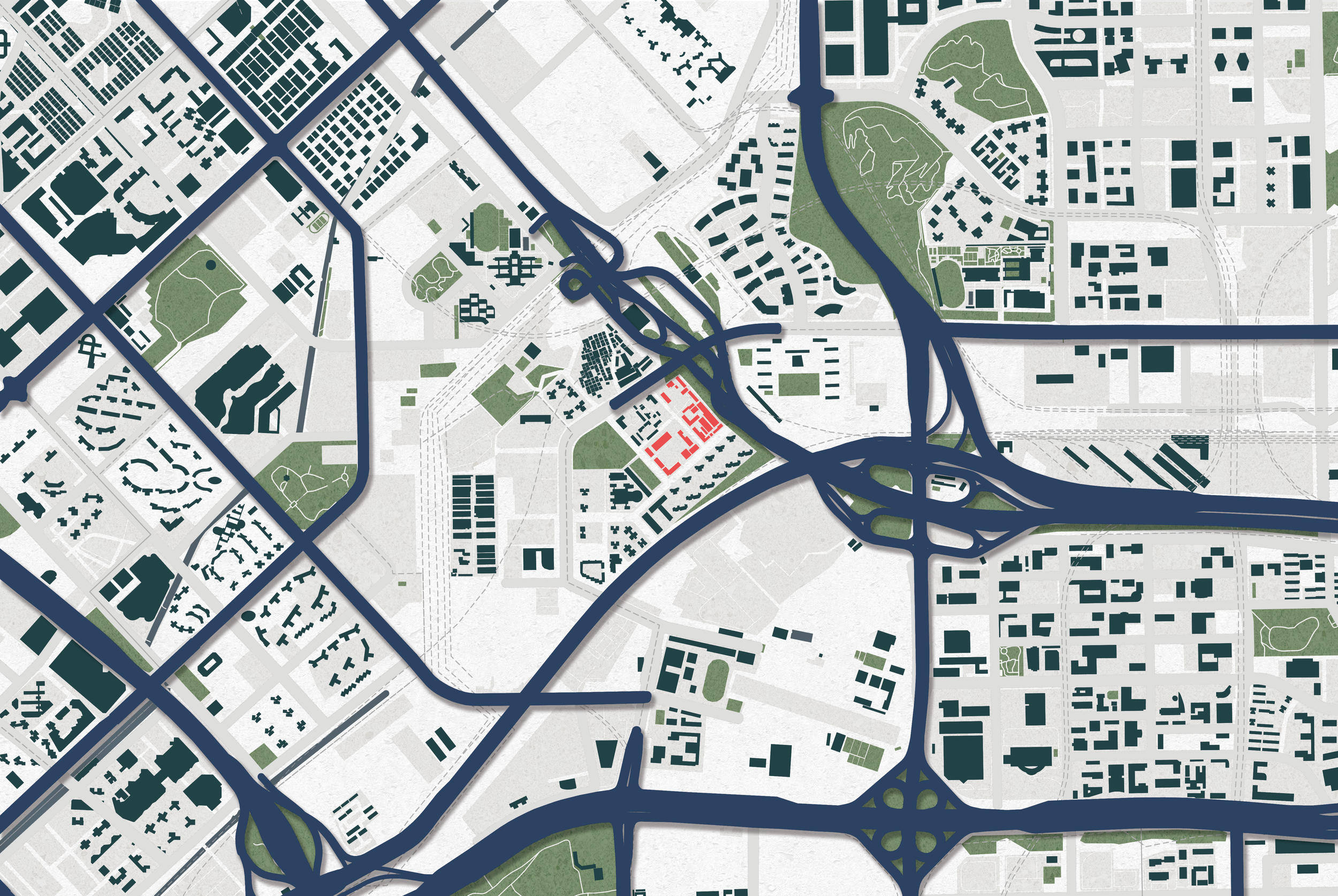
Site Analysis
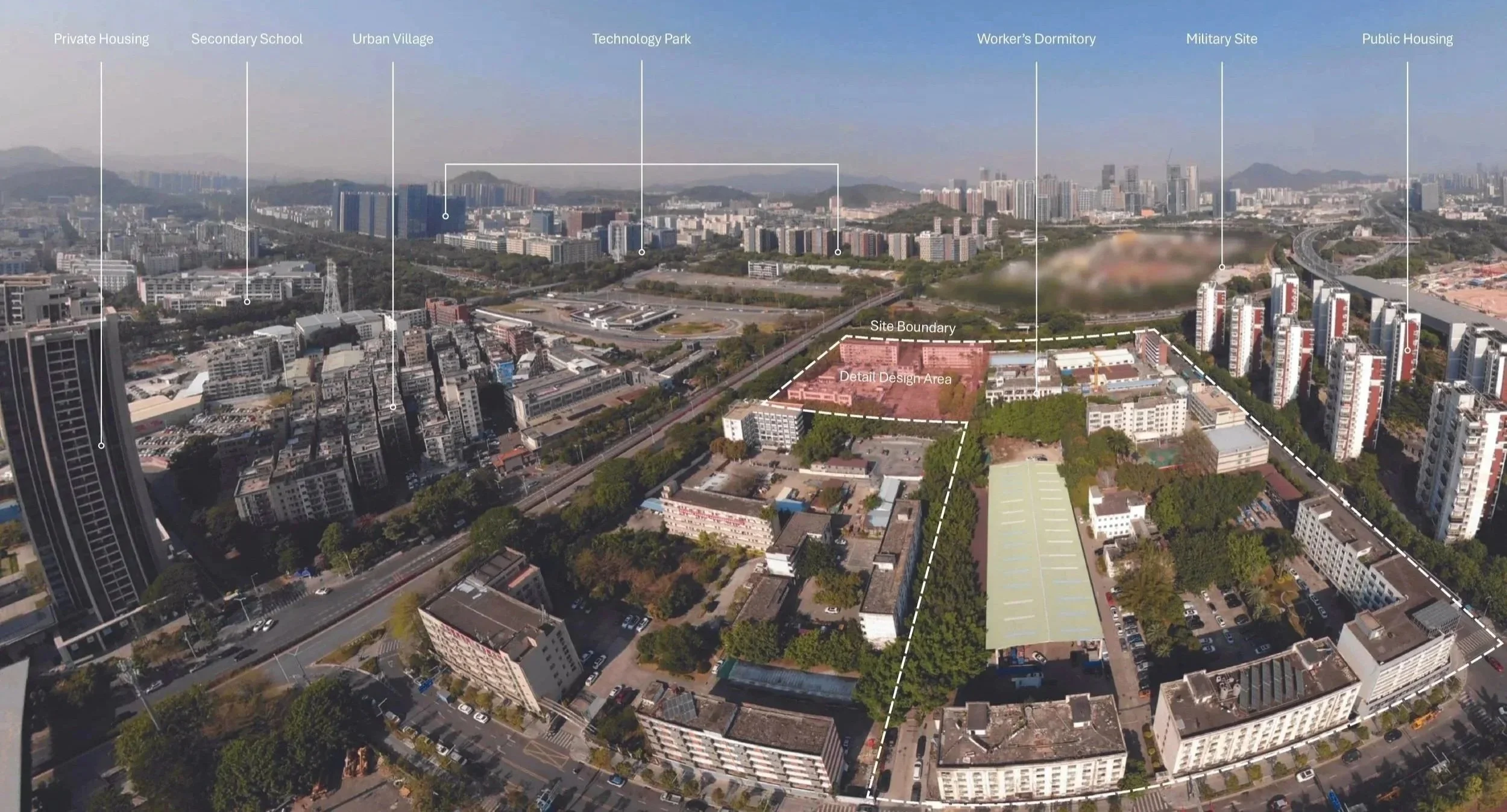
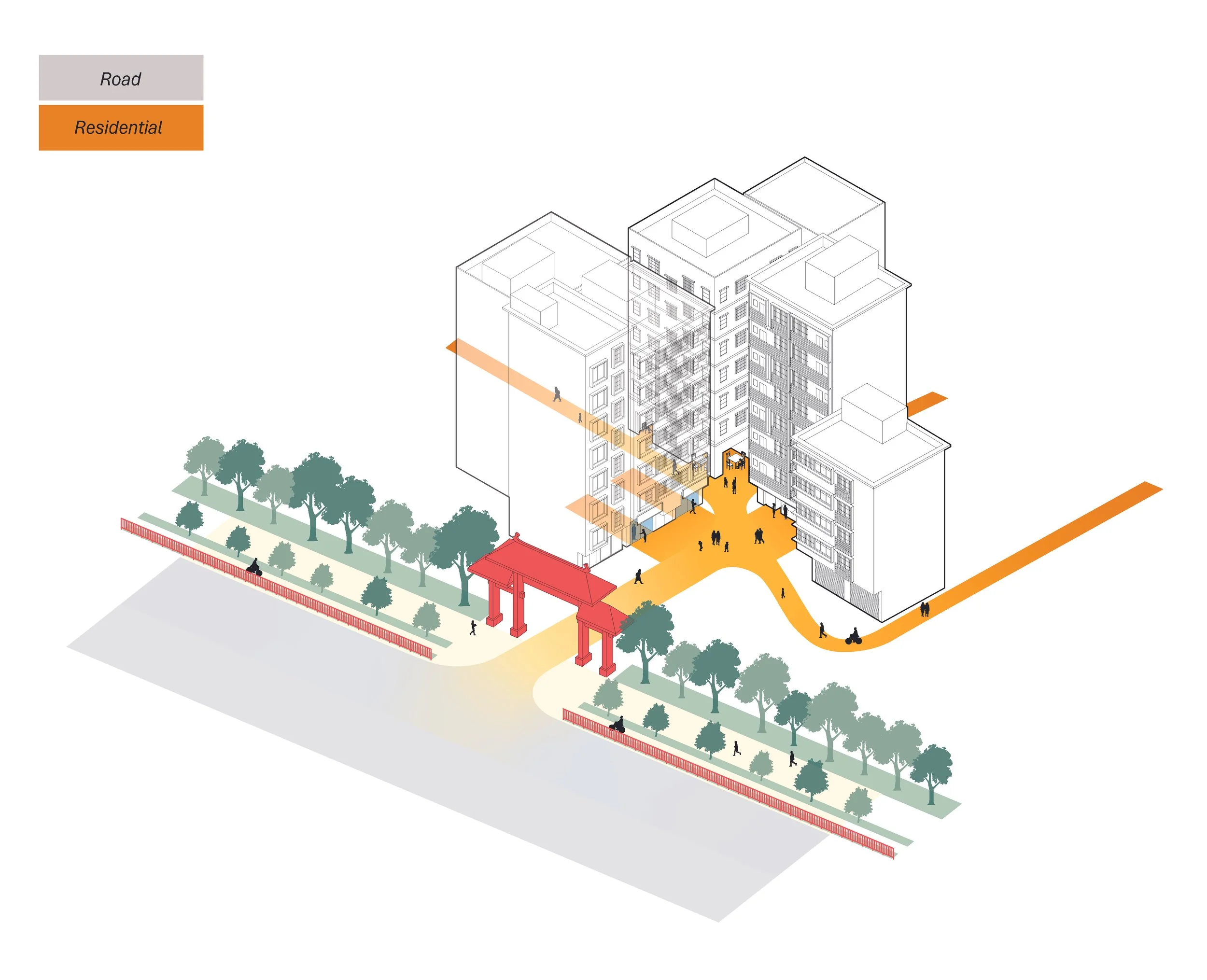
Urban Village
Public Housing Estate
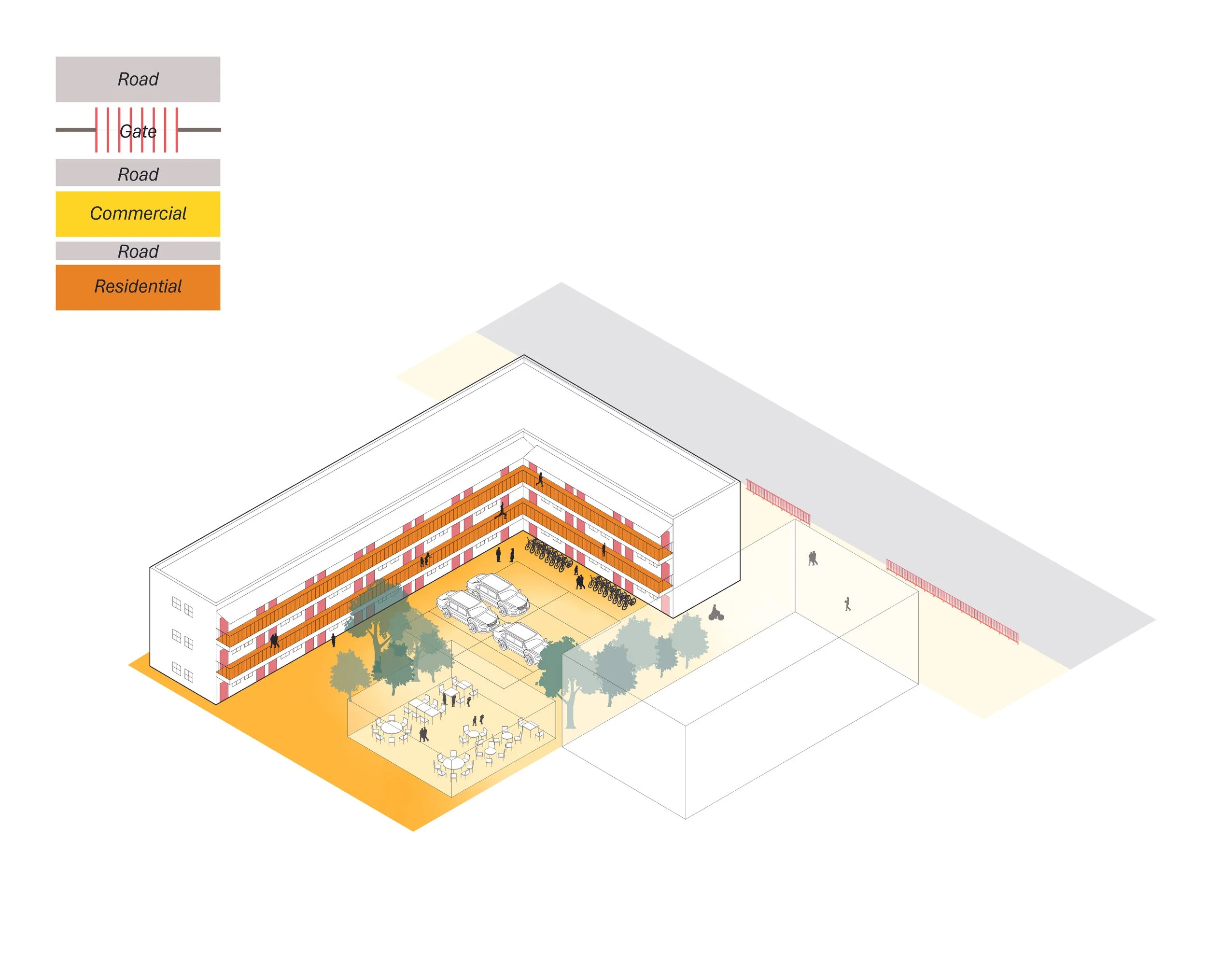
Worker’s Dormitory
Private Housing Estate
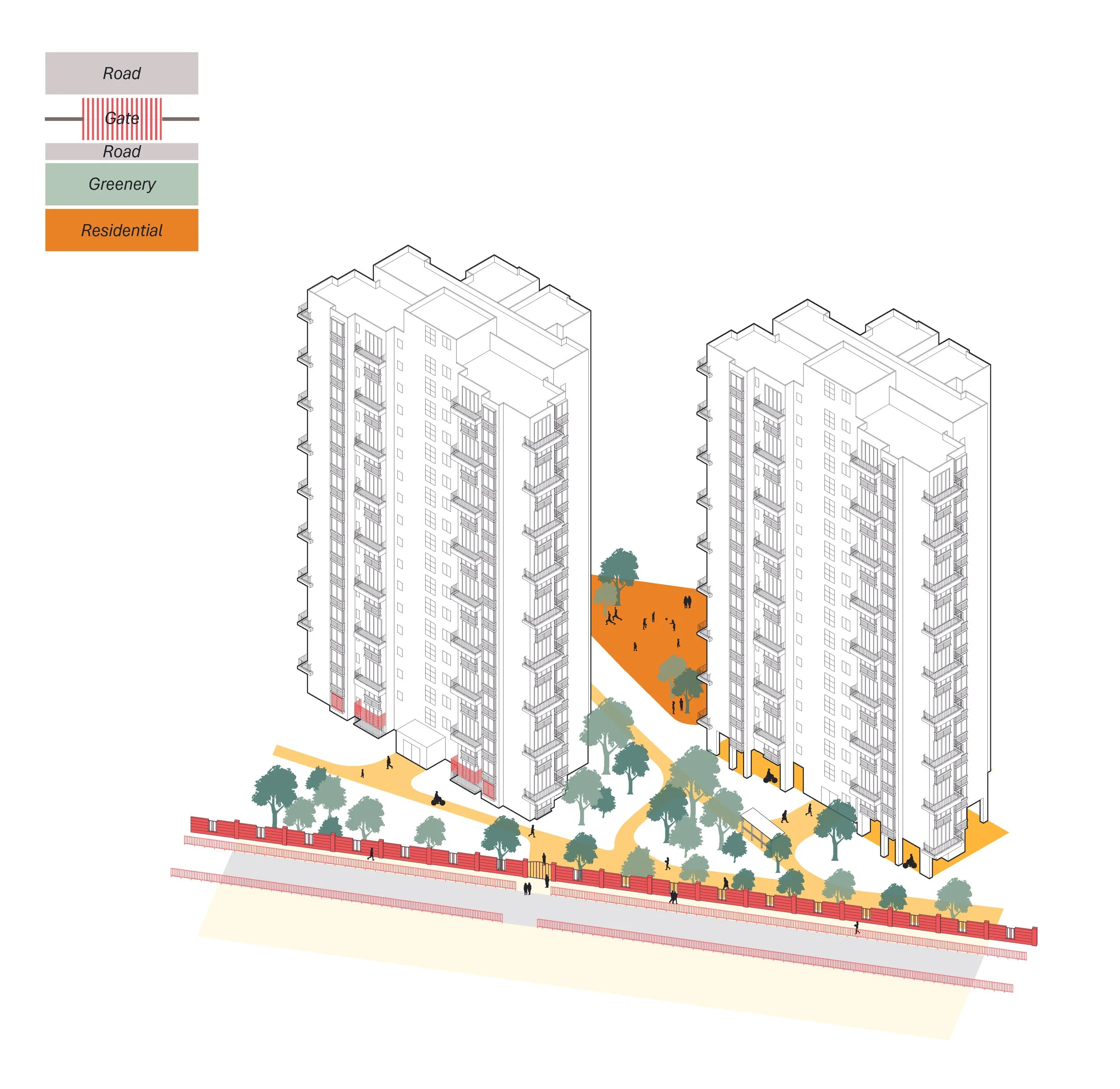
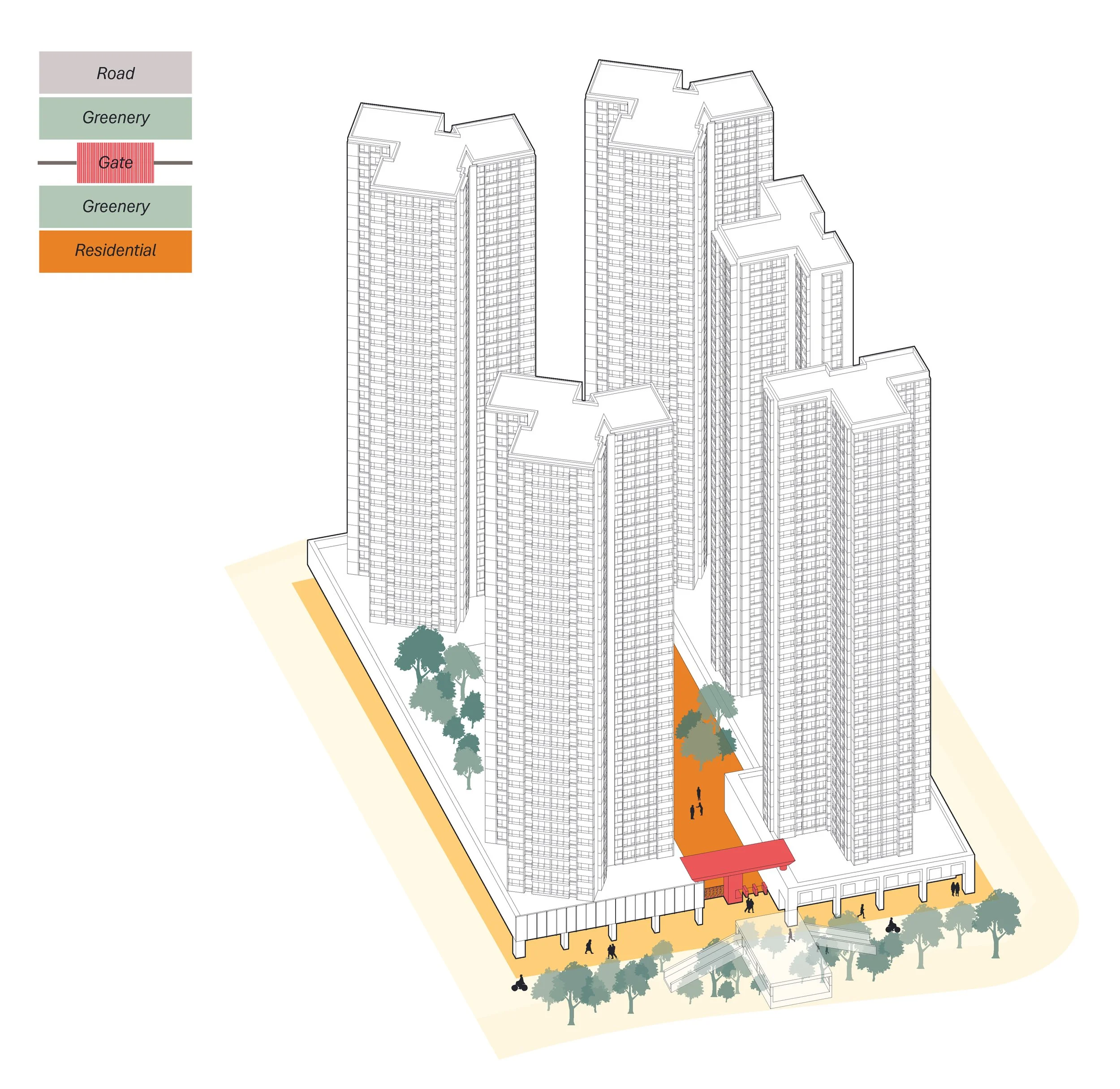
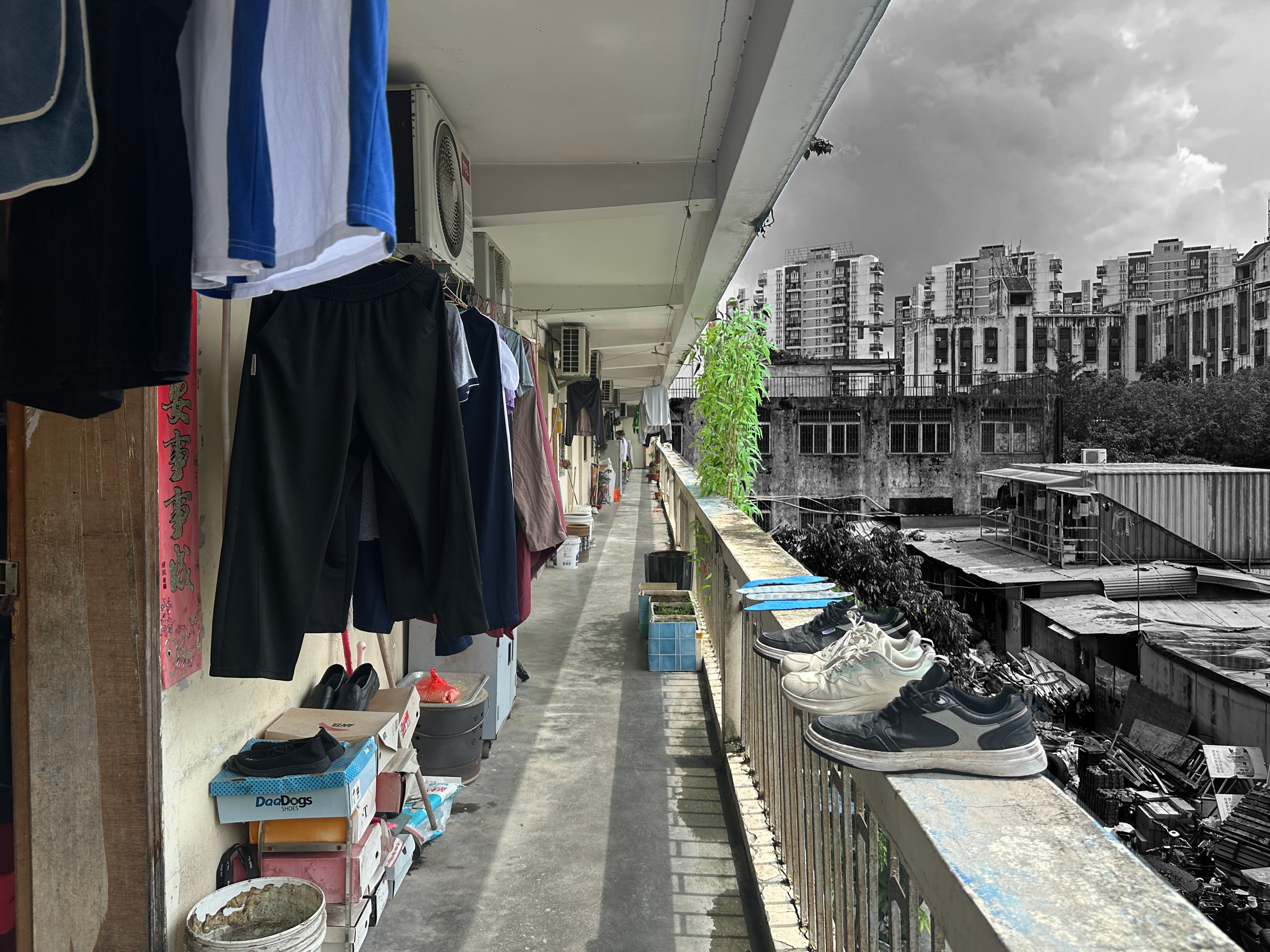
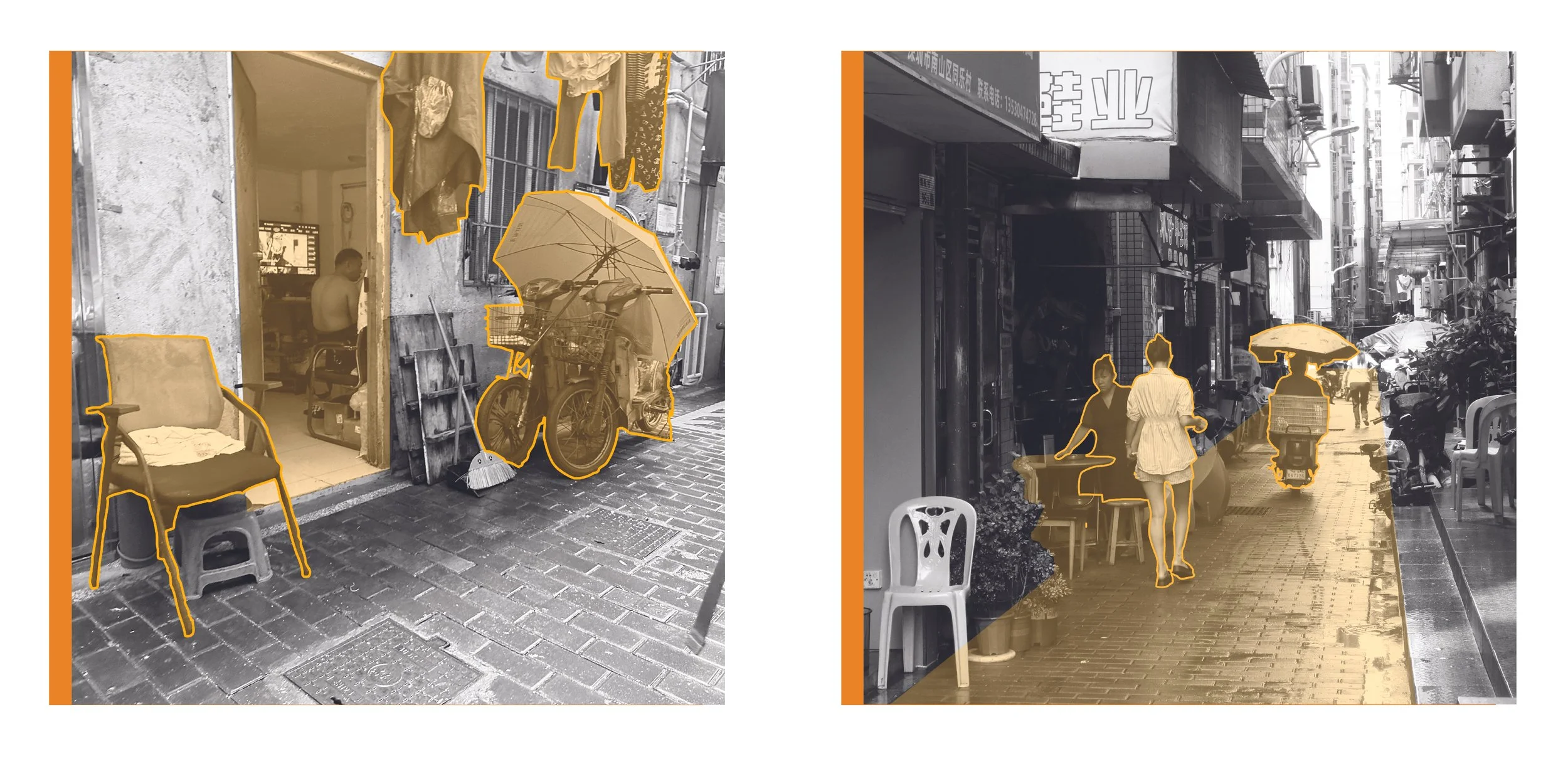
Door Front
Corridor
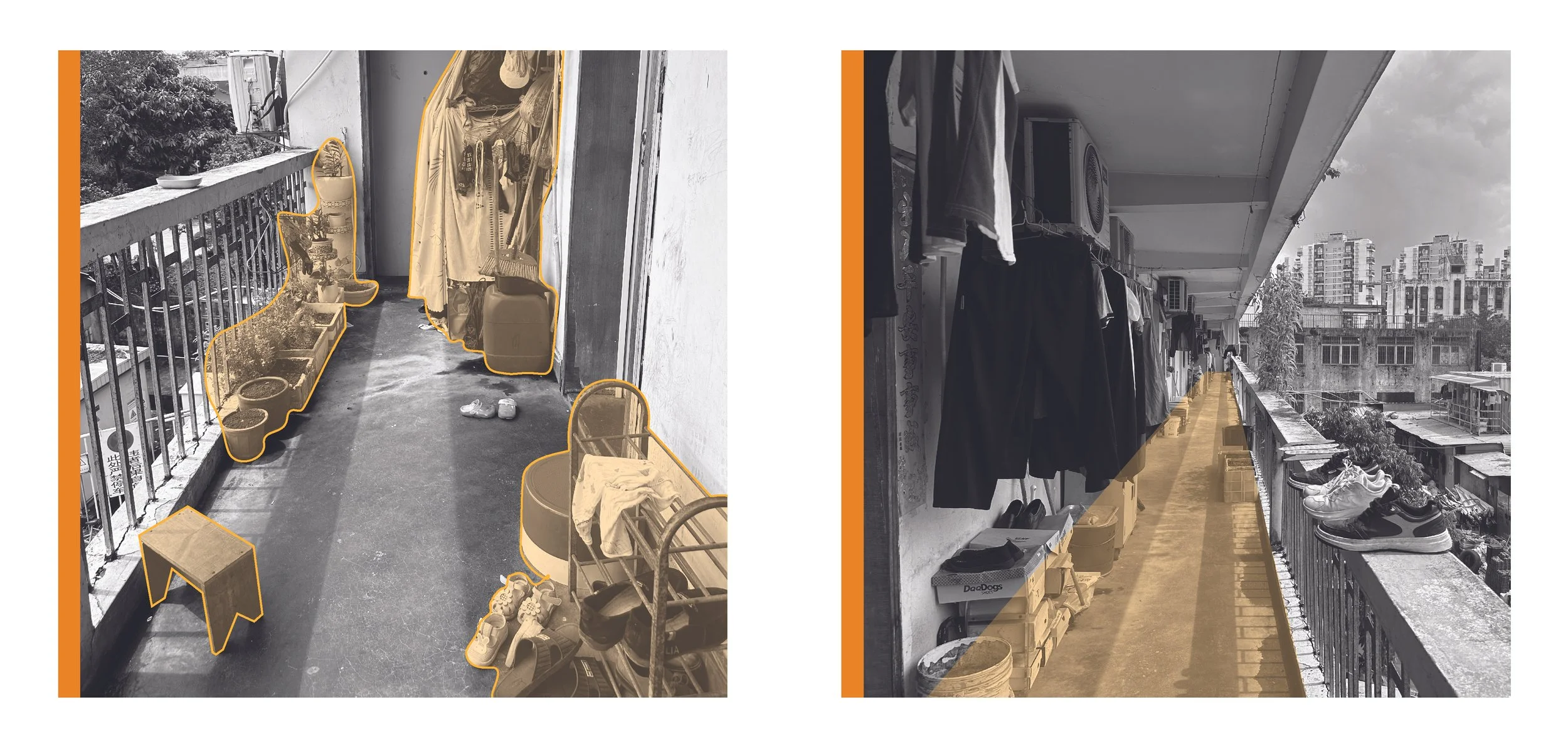
Living Room
Personalised Alleyway
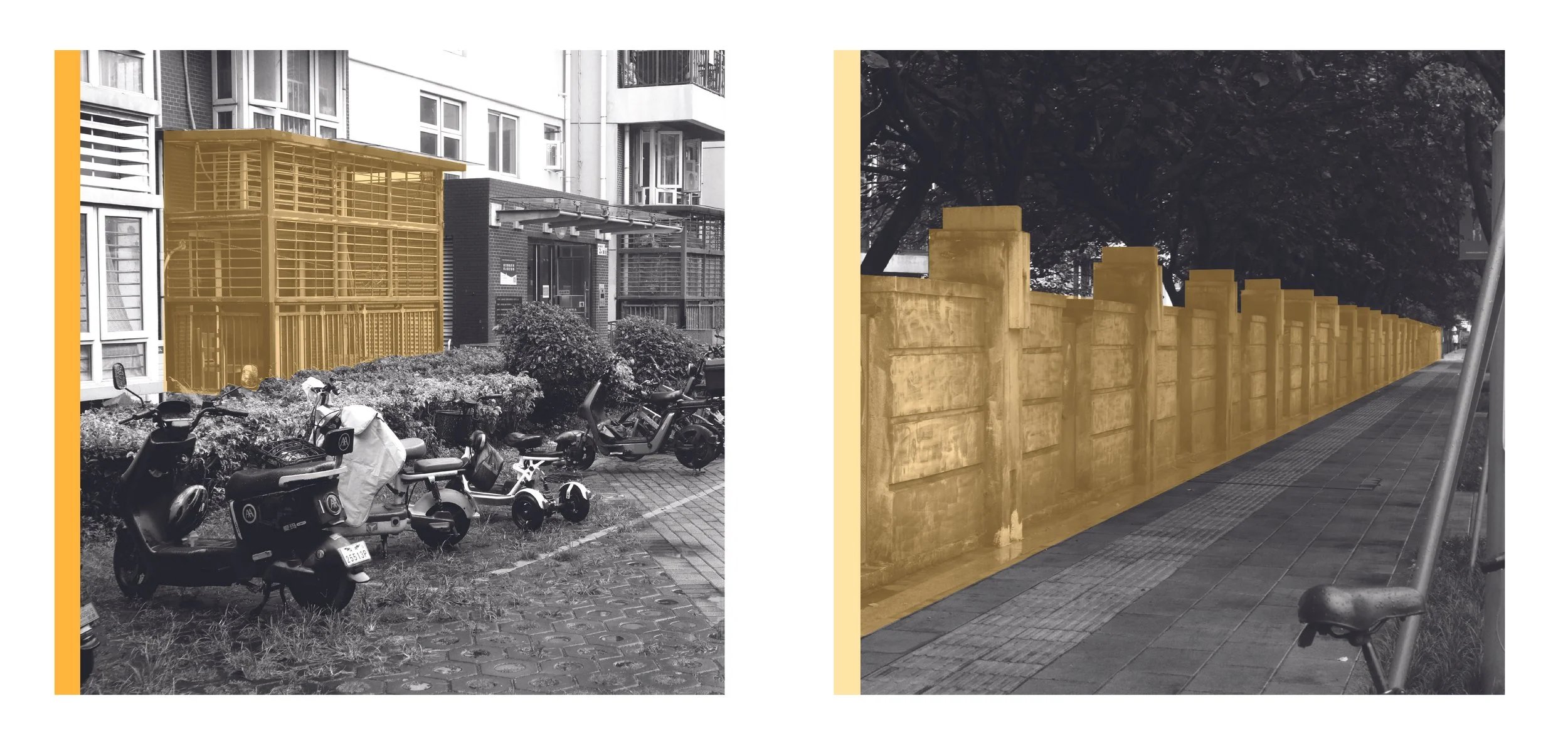
Ground Floor Unit
Public Street
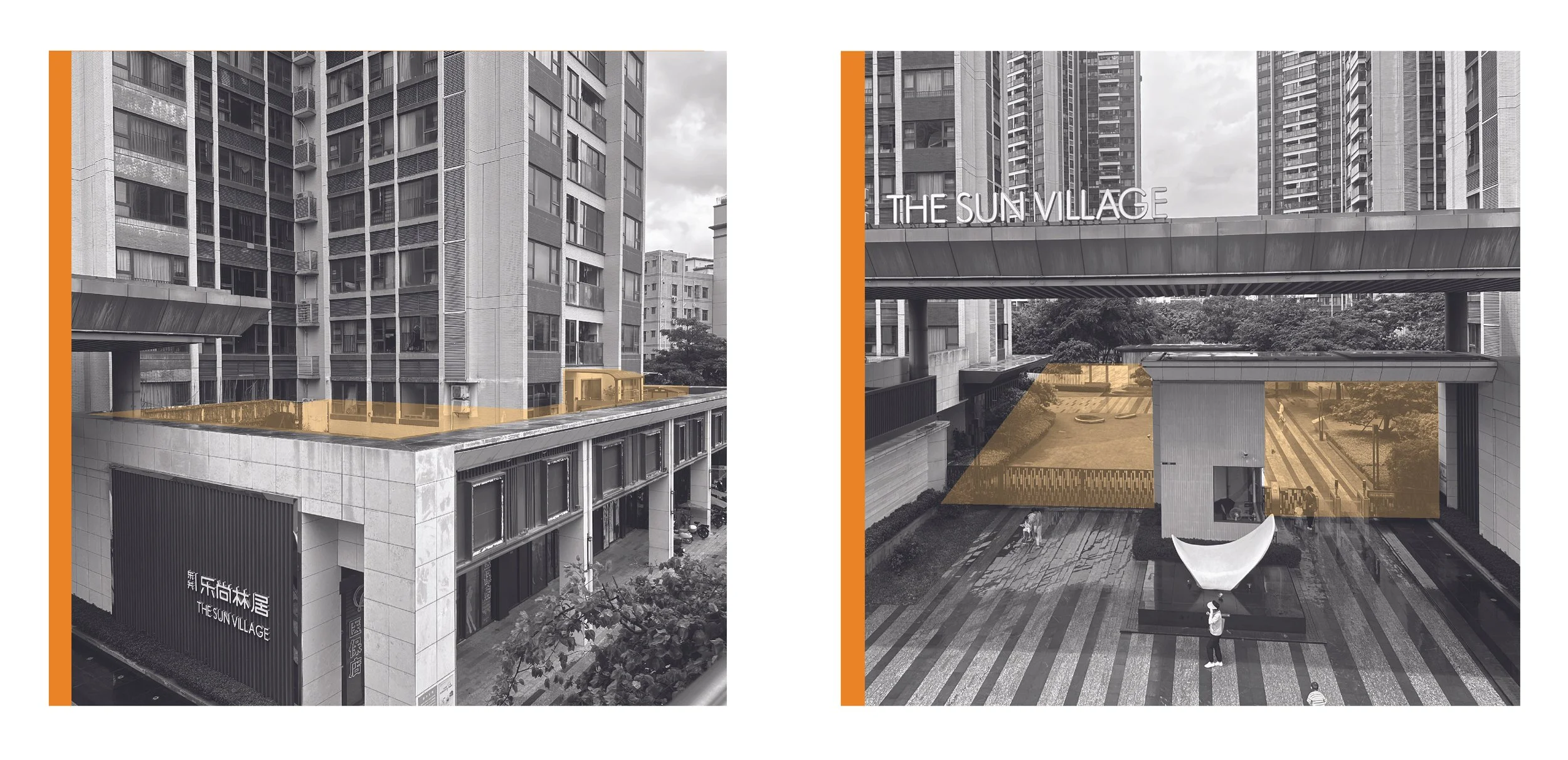
Podium
Courtyard
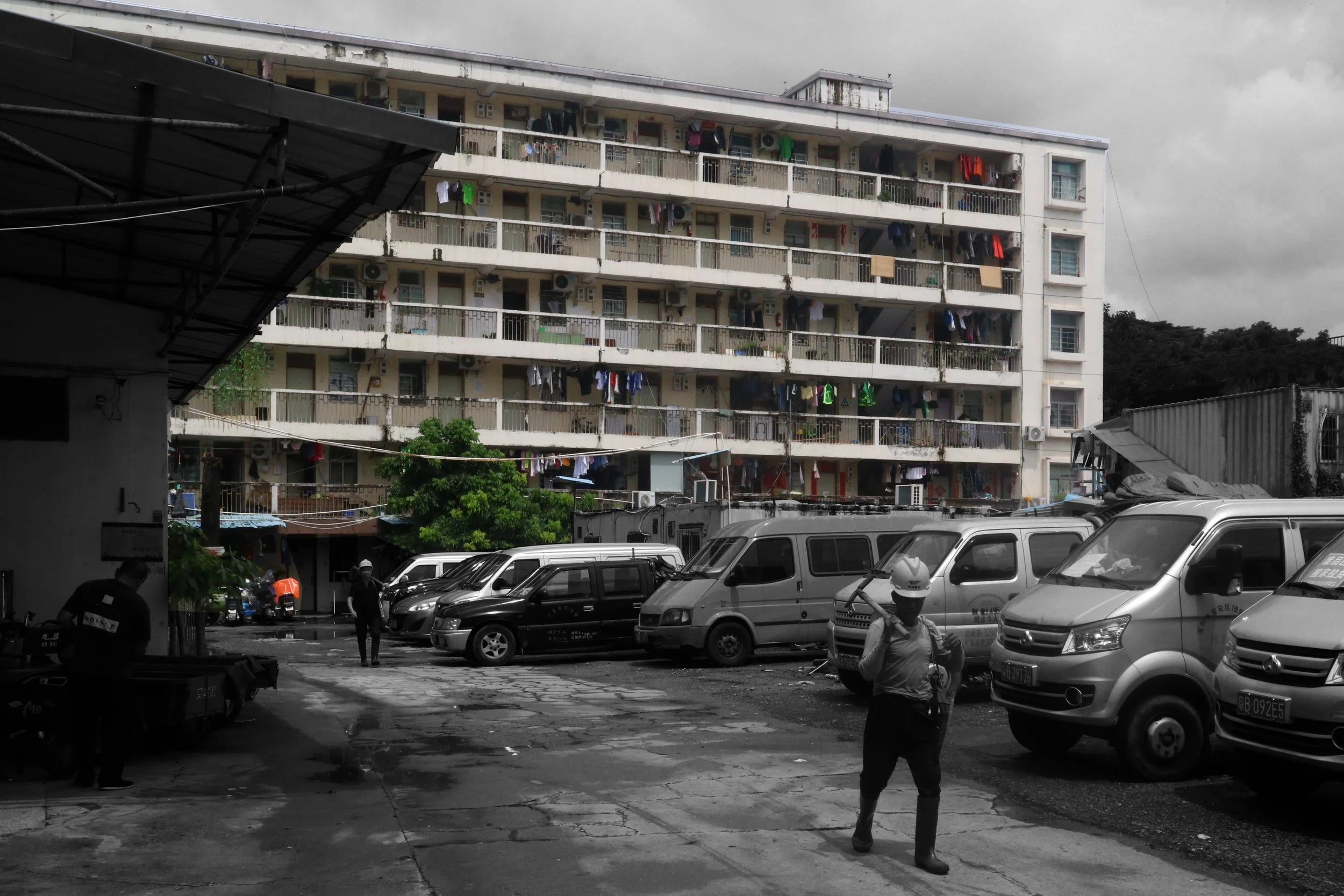
Design Strategies
Green Space Network
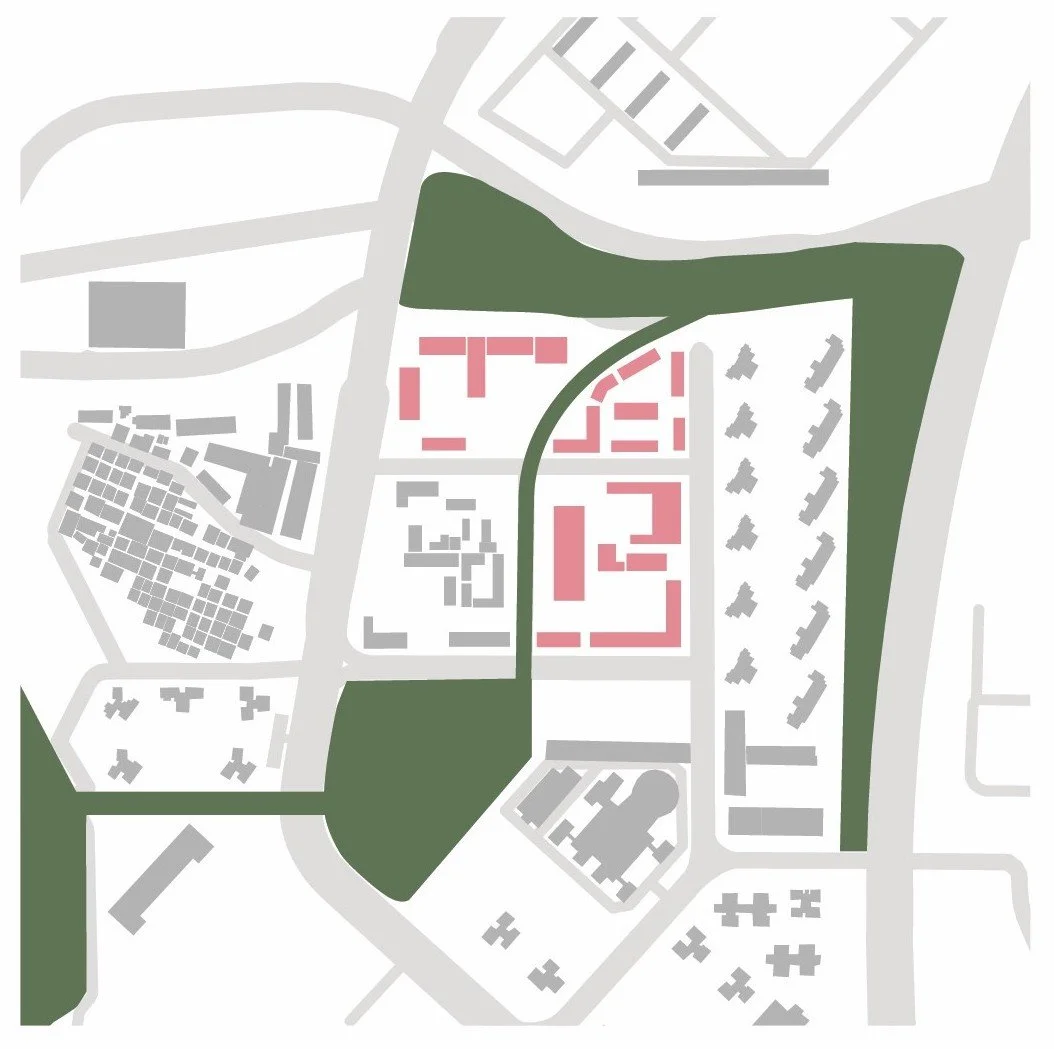
Connecting the neighbouring green spaces like Tongle Sports Park, Tongle Cultural Park, and Railway Park, to form a green corridor.
Scale of Social Identities
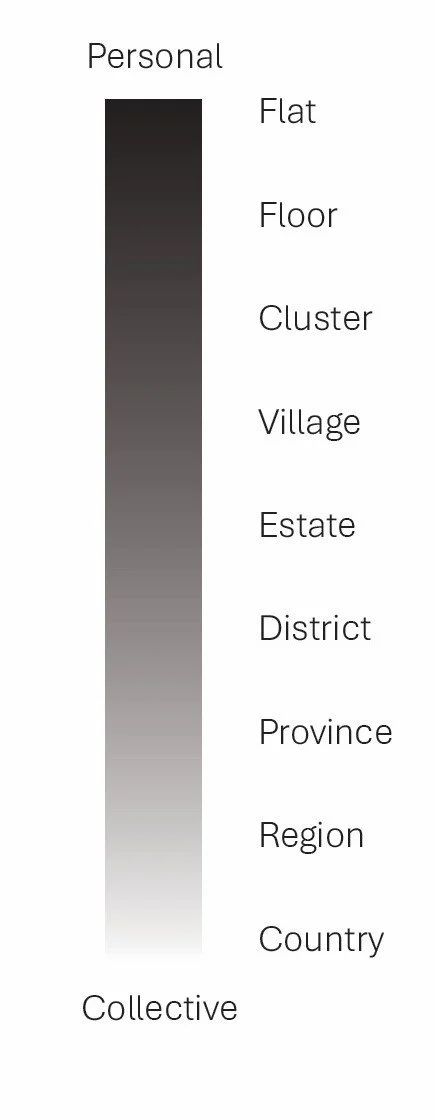
The design strategy aims to make clear the layers of social identities that one could identify with, to build up the community.
Massing Typology and Zoning
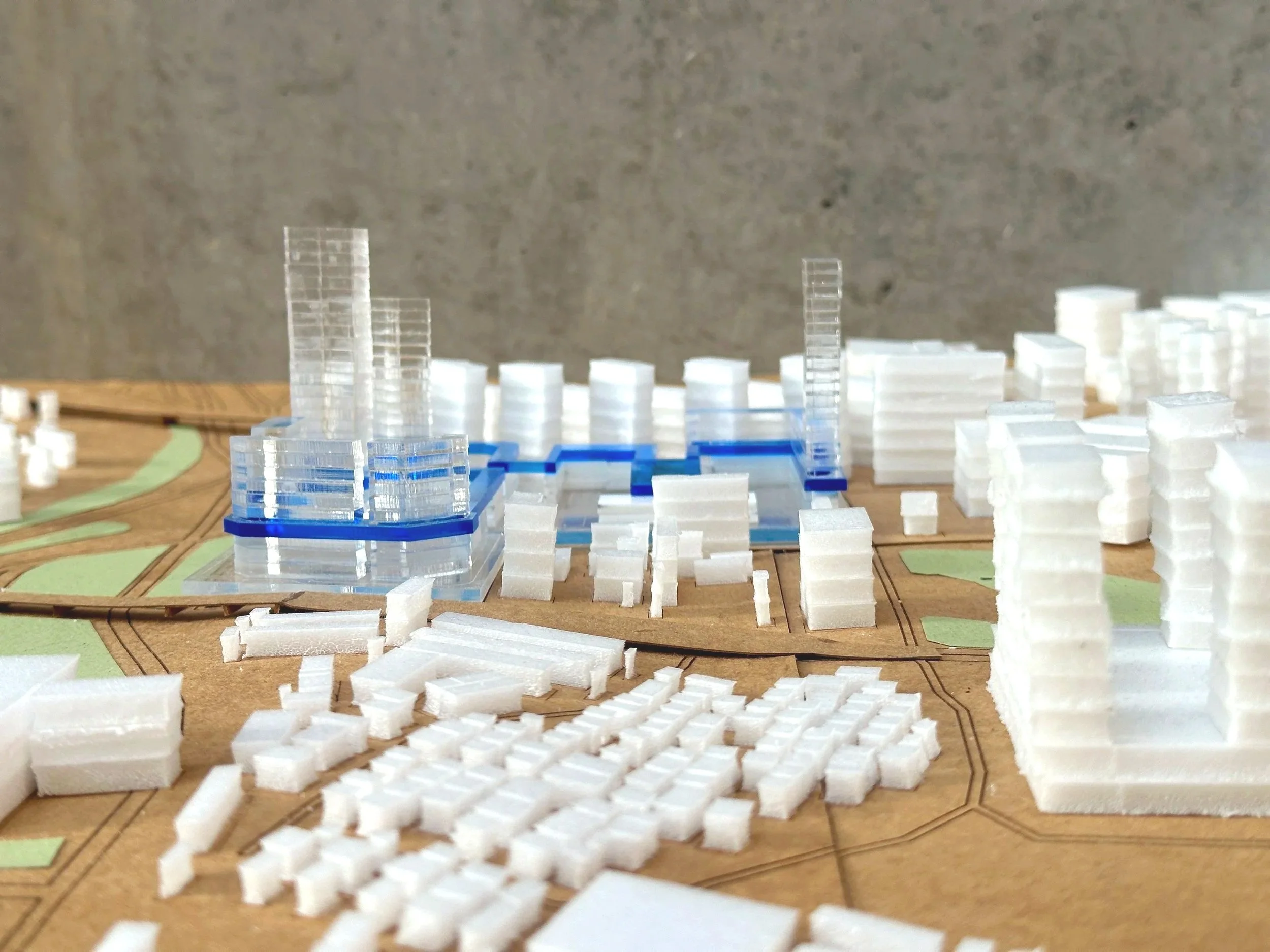
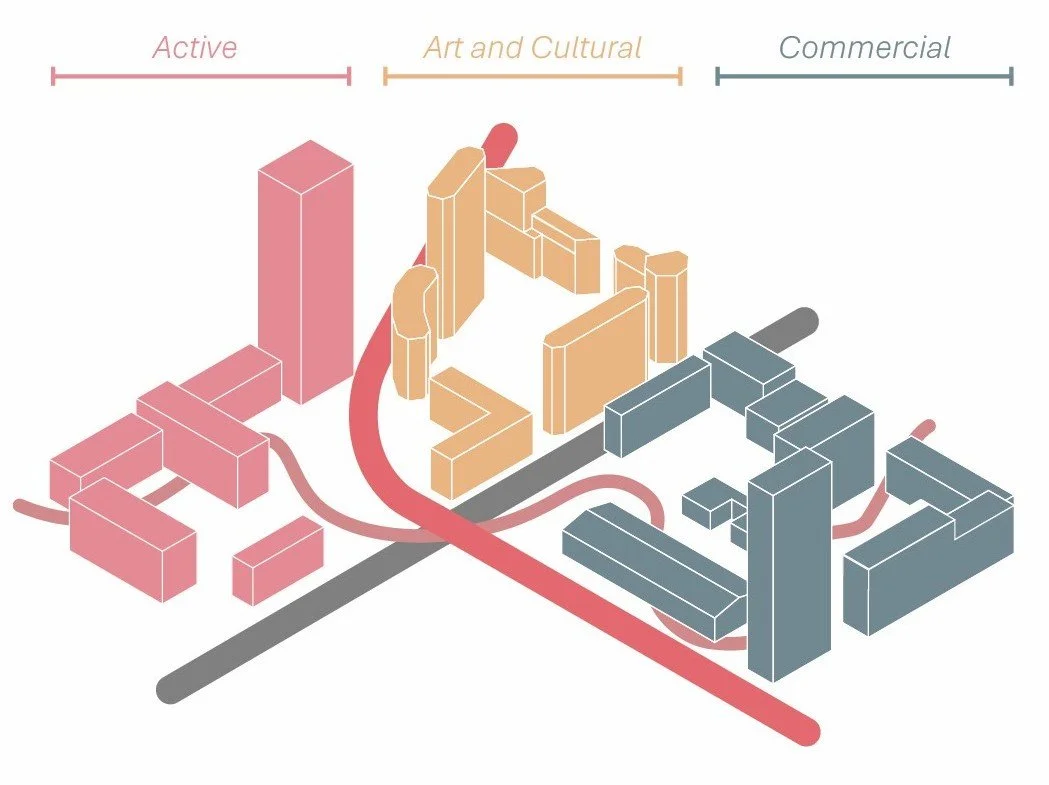
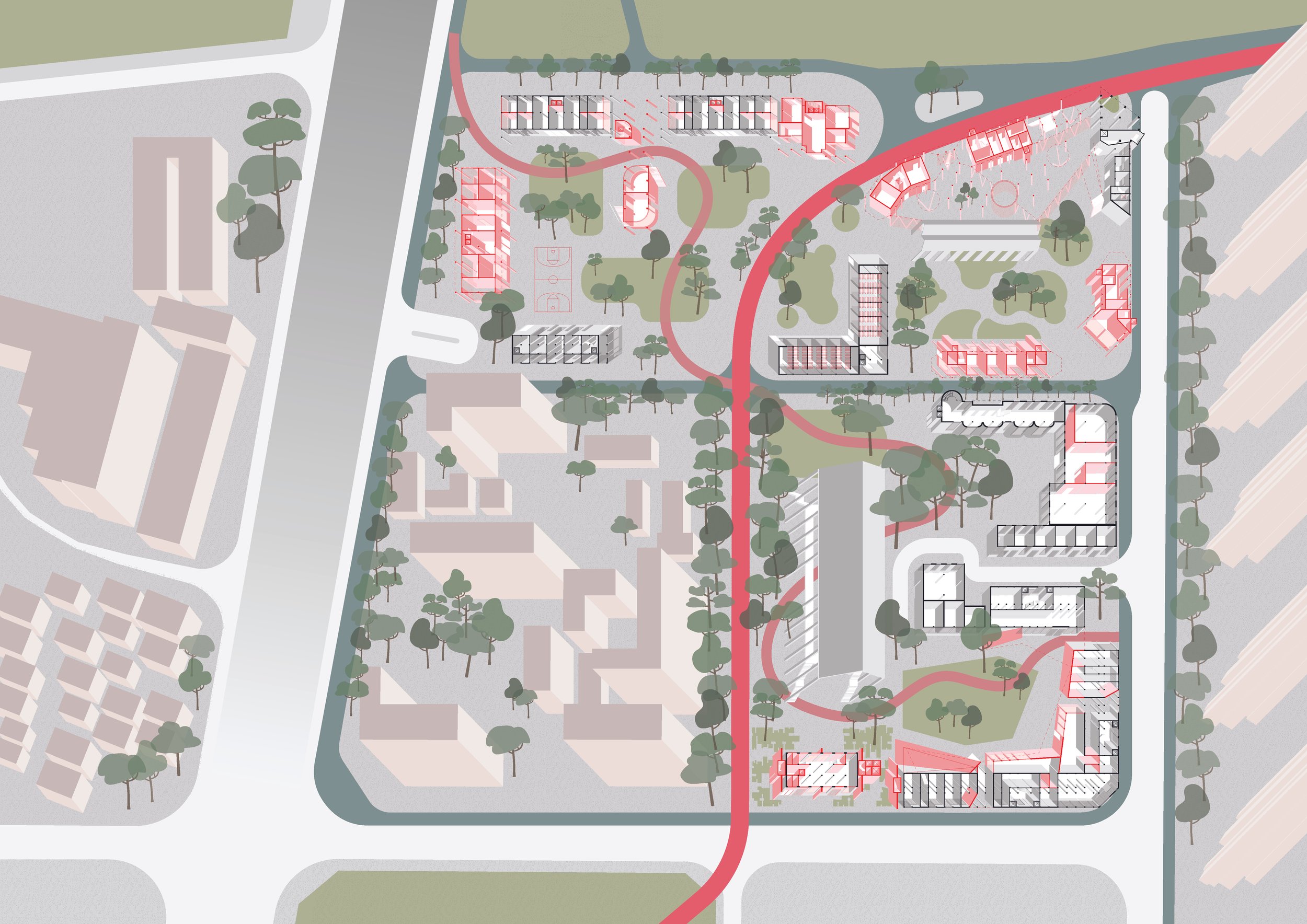
Perimeter blocks form three “villages” on the site, each with its unique characteristics. Primary and Secondary circulation are shown.
Selection of Reuse Buildings
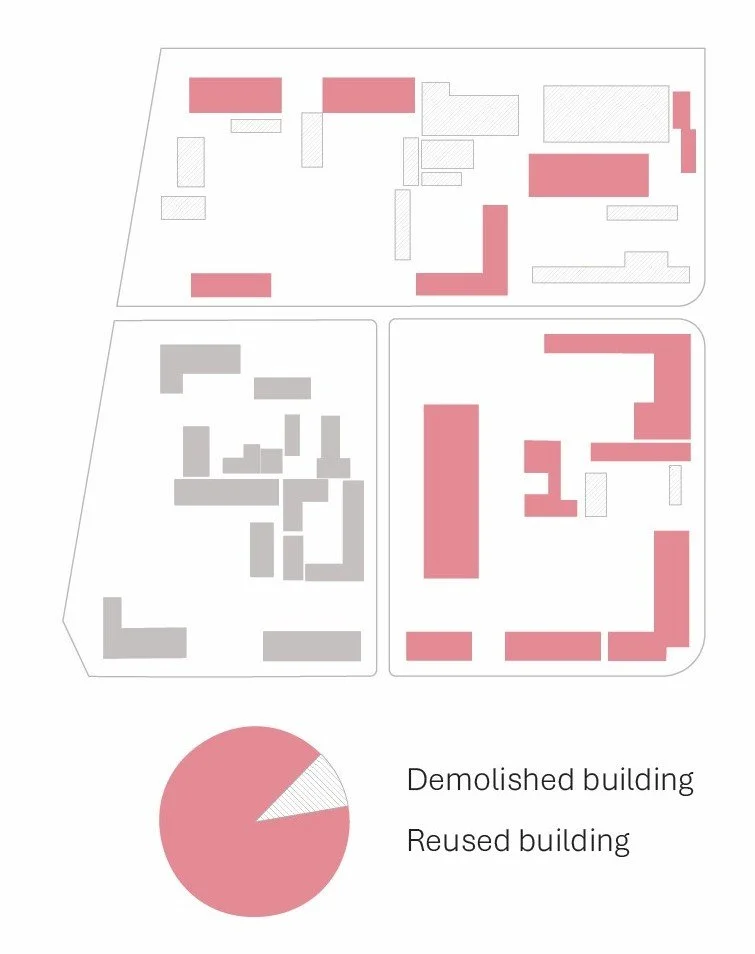
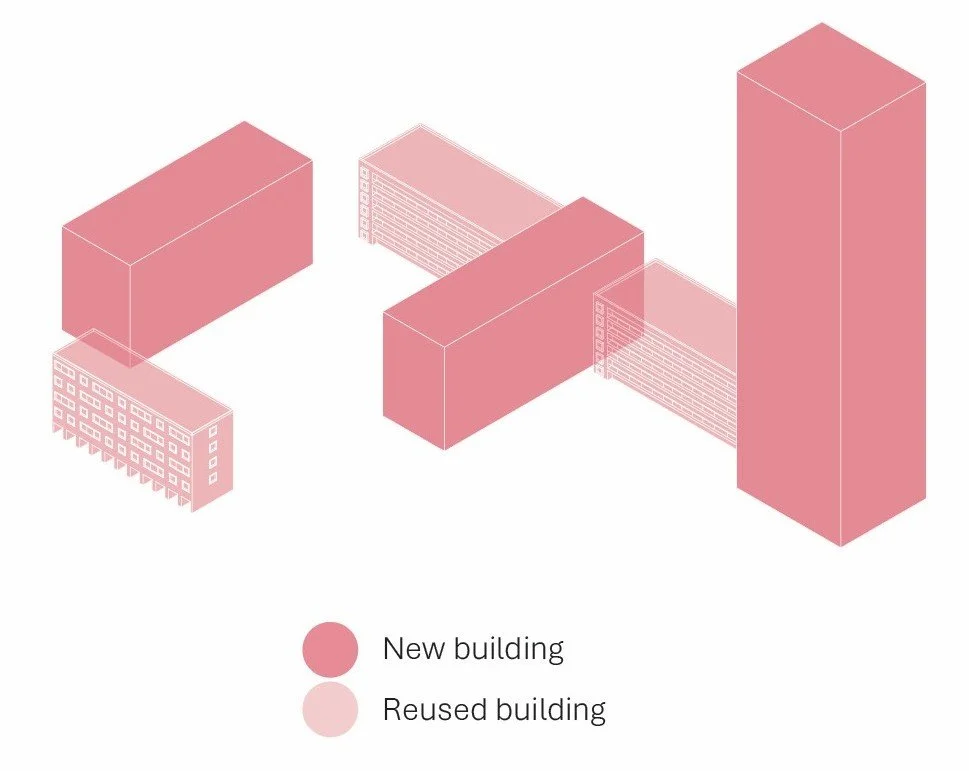
Selection for adaptive reuse buildings prioritises robustness and durability, with a preference for concrete structures.
Privacy Zonings
Not only within the urban housing estate, but there are also layers of privacy zoning within each village to inform the building design.
Building Reuse Strategy
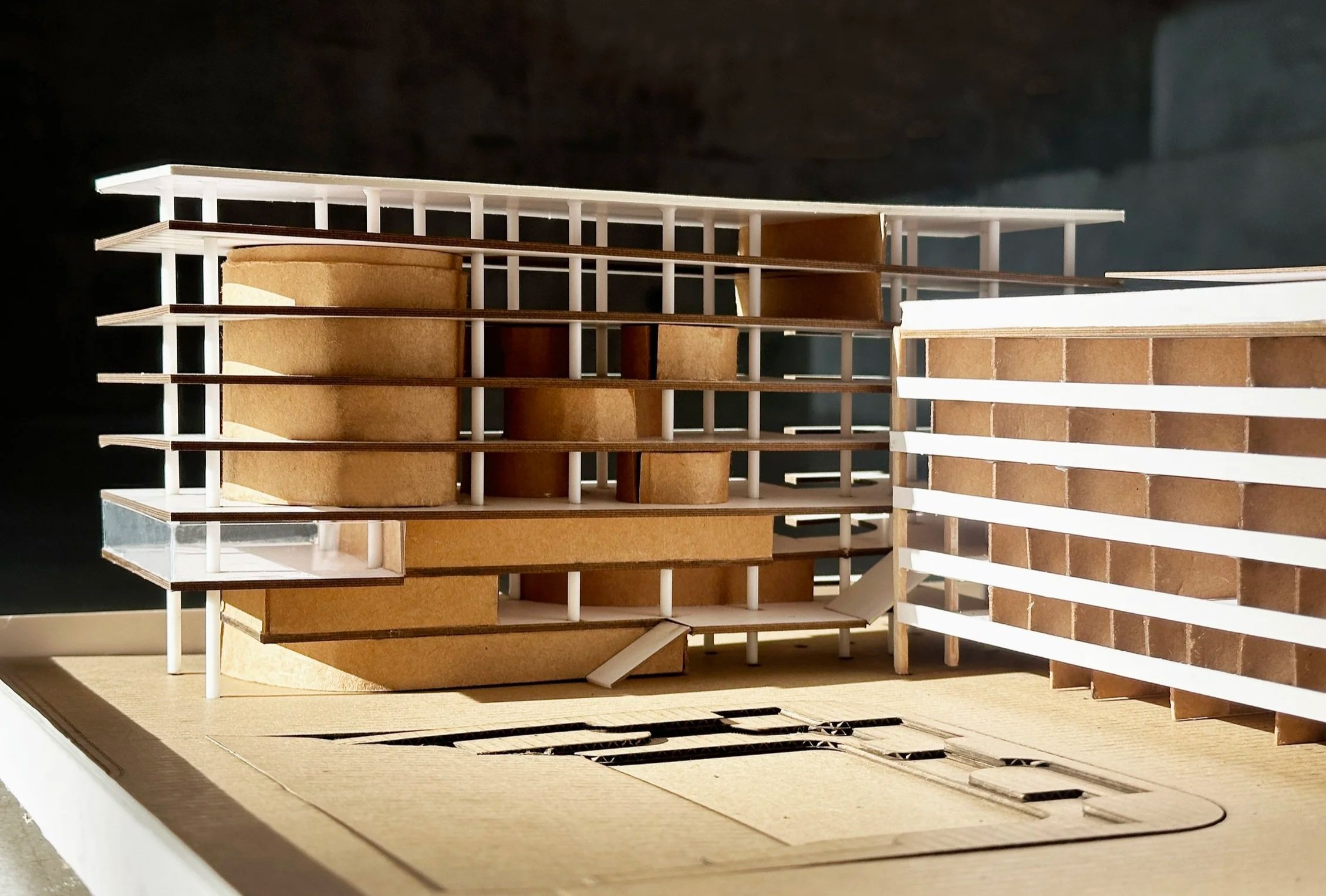
The layout plan of the existing workers’ dormitories has been changed. New blocks and a tower are connected adjacent to the existing building.
RE:Activate Community
A main circulation connects three villages, while the secondary circulation serves as an alternative route. Holistic programmes are found in the estate, including housing, retail, community market, library, elderly centre, and kindergarten, etc. This drawing also illustrated the relationship between reuse architecture (black) and new-build architecture (red).
Unit Modules and Cluster
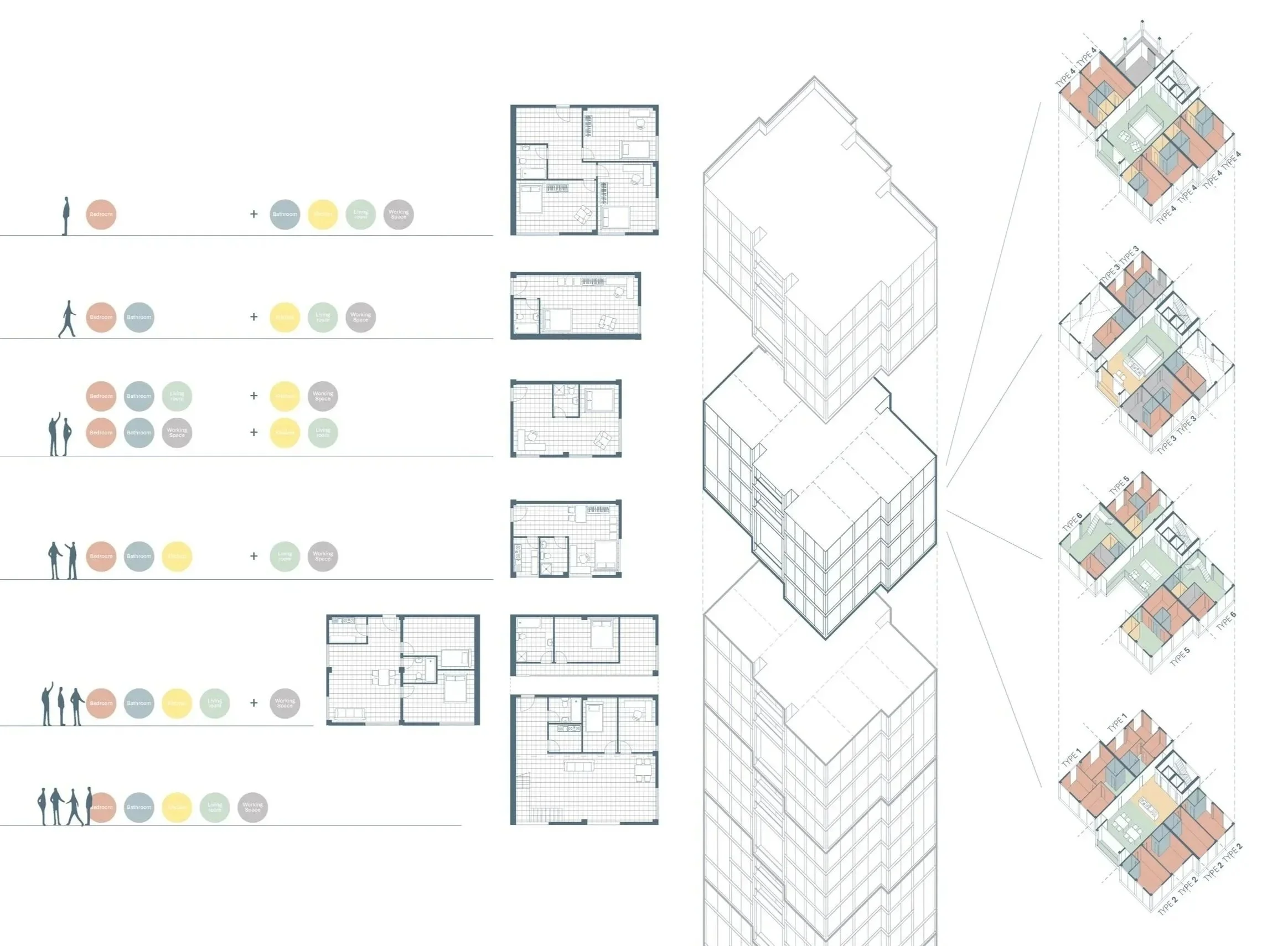
As the working model is transforming, the mode of living is also revisited. The collective living lifestyle is introduced to support the trend of remote work.
With the demand of catering to different groups, the following unit types are developed. Four floors in a tower build a cluster that contains all types and sufficient living and working space.
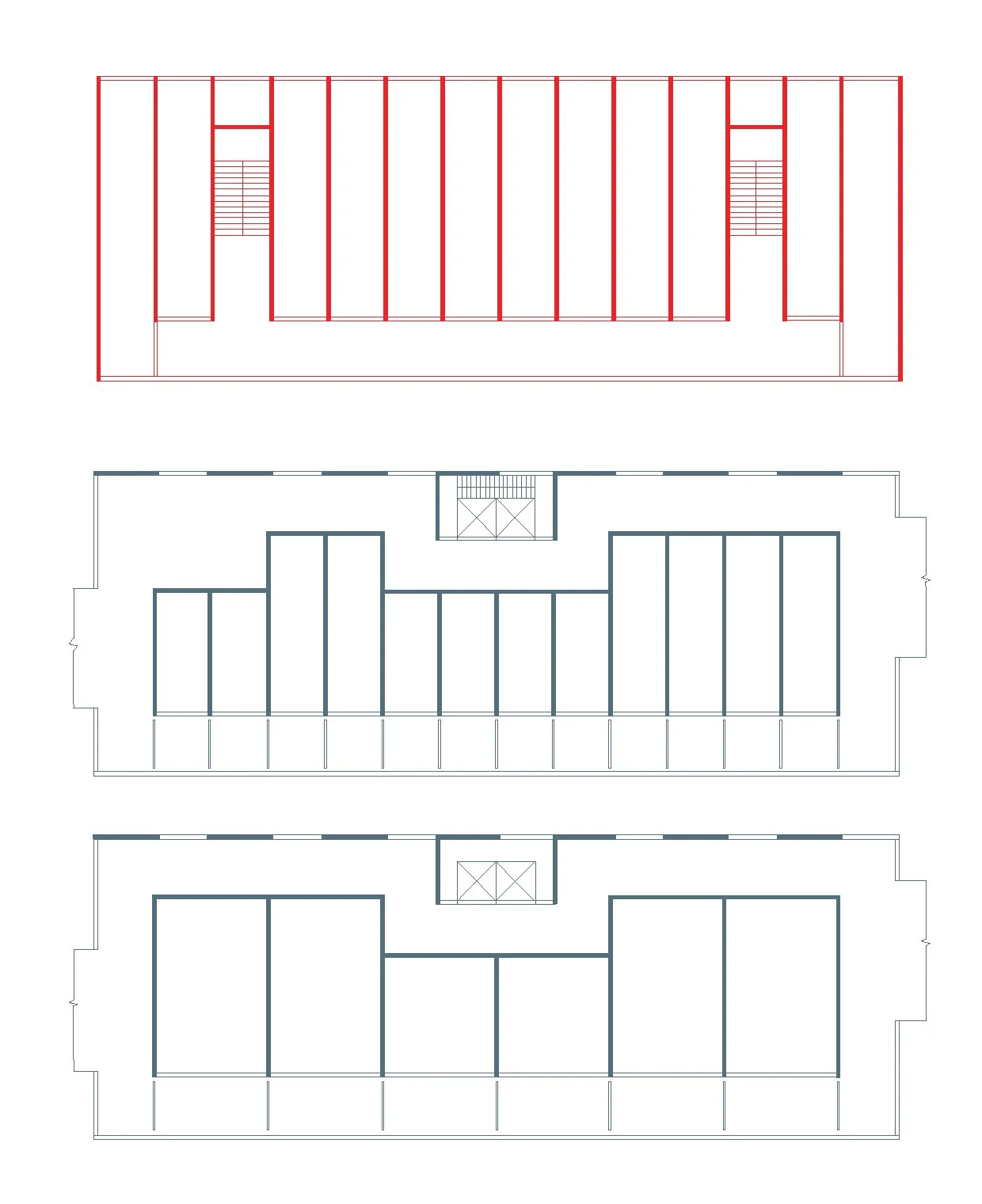
Original Typical Floor Plan
New Typical Floor Plan
The Active Village
Dynamic layouts are employed in the village, while community spaces are added adjacent to the existing workers’ dormitory. The design aims to create a community that accommodates the work-live environment.
Revisit of Layout
The original worker’s dormitory contains a slab-block layout plan. All units are in a linear arrangement.
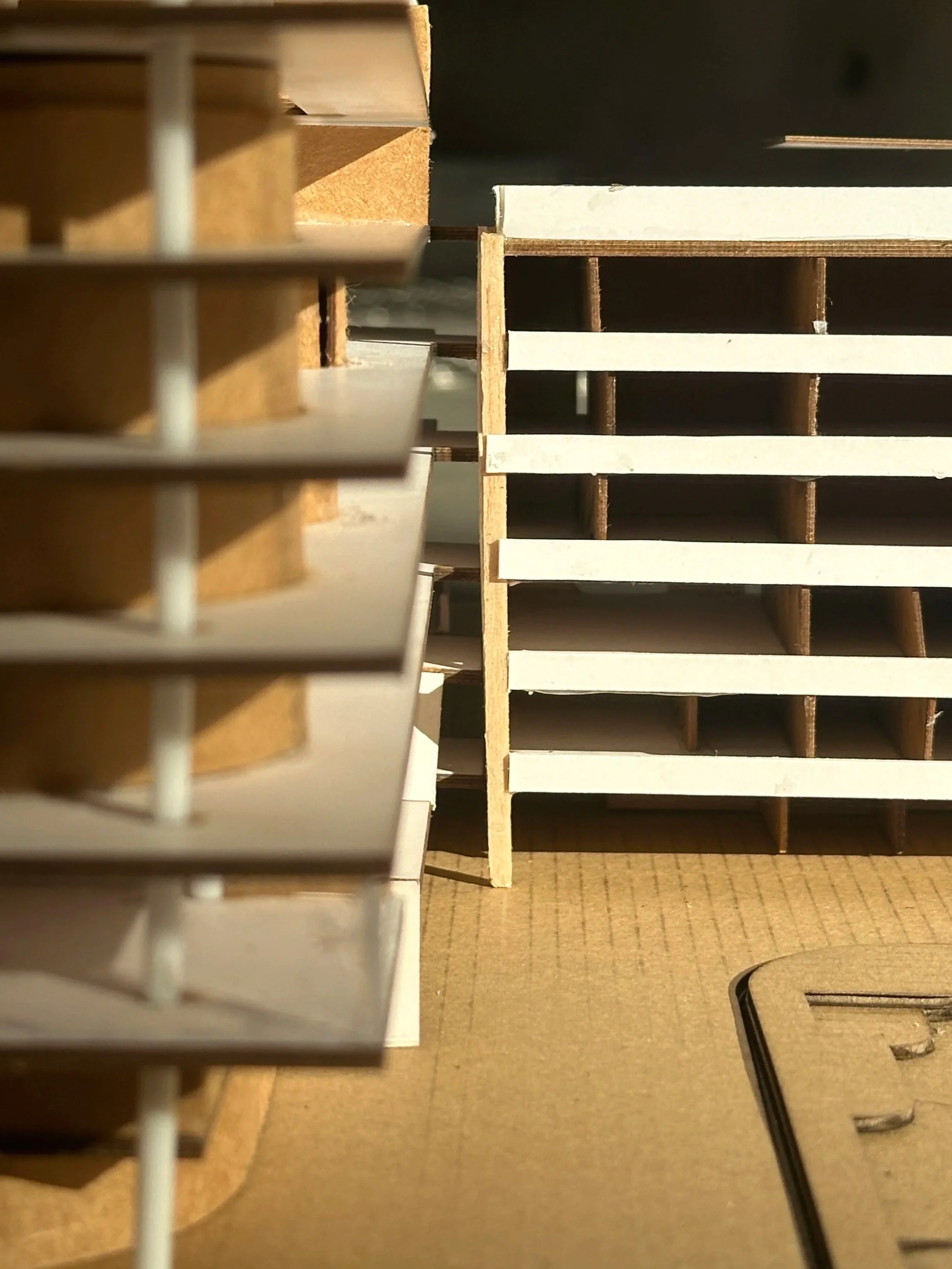
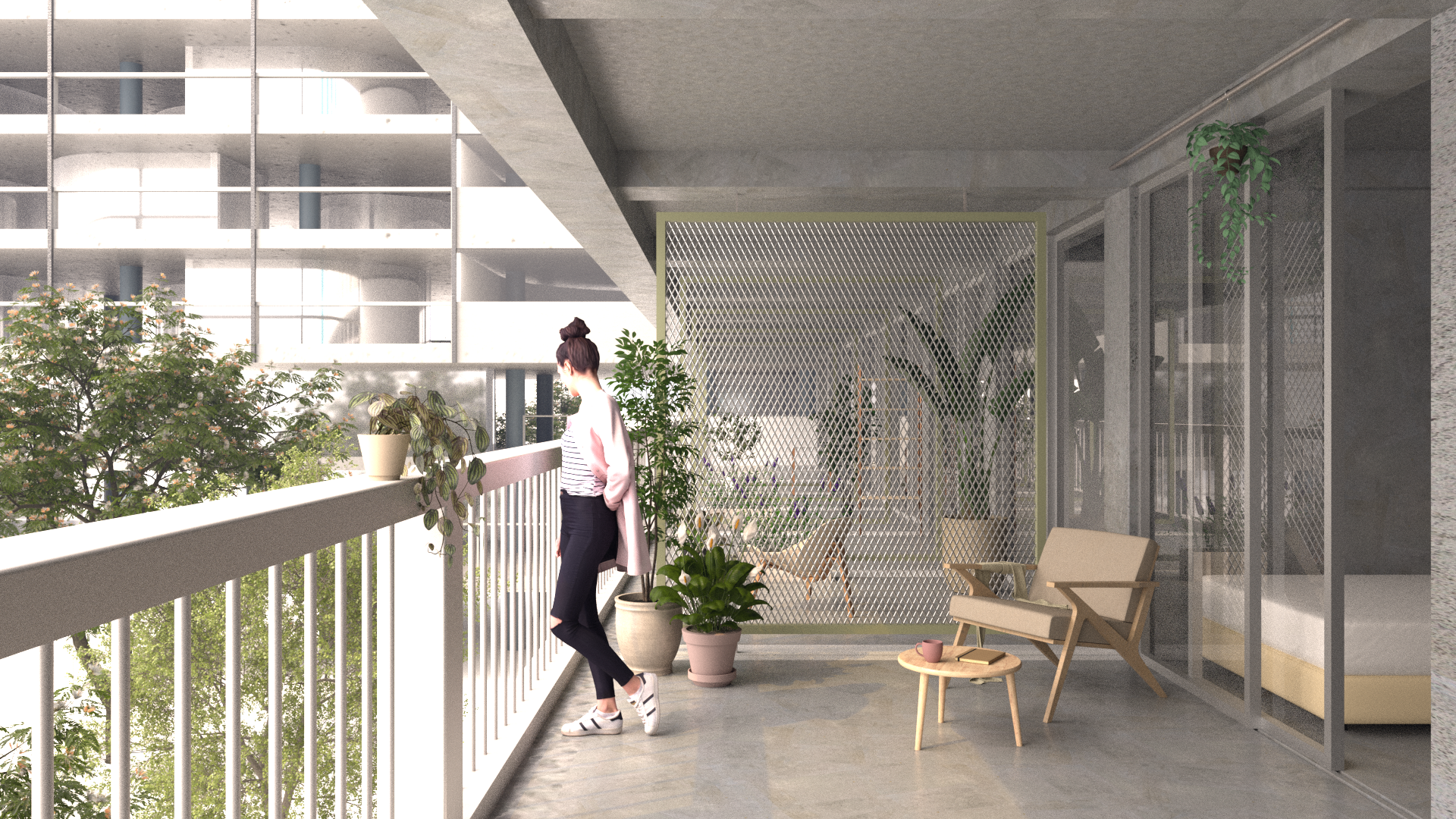
To create different sizes, types and layers of privacy zones, there is an intervention in moving the corridor to the back side of the building for a peaceful area towards the green space.
In the meantime, the space outside of the original front door is legitimised as a private balcony for the residents. As there is only a movable wire mesh in between each balcony, it creates a softer boundary between neighbours that restricts residents’ freedom in connecting with others.